
By Bob Glaser
For over twenty years, I have been fascinated with how people use and interact with technology. I constantly observe the usage patterns, intensity and behaviors of individuals and frequently make note of it. Since it is anecdotal and not controlled it may not be solid data, but there are patterns, particularly when you focus on three things: similarities, differences and outlier or anomalous behaviors. This is not limited to mobile devices and laptop/desktop computers and hardware, but that will be the focus here.
I tend to dismiss my own use of technology for two reasons. First, I have been using computers since before desktops existed. For that reason, I’m always keenly aware of new technologies in software and hardware in both their capabilities, limitations, and adoption and use. Second: I cannot dismiss the fact that I would have biases that no matter how aware of them I may be, they would absolutely corrupt any quantitative data I may consider. Even in qualitative situations, my own perspectives may help in guiding me but that must be balanced with the awareness that it’s likely to color the outcome if it’s not considered with boundaries.
I often find myself observing how people interact with technology. I look at facility, frequency, behavioral psychology (particularly emotional aspects), dependance, and myopic exclusionary approaches in terms of social interaction. Examples of this also include what social media platforms have the higher frequency of use based on the age group. (e.g. Baby Boomers using Facebook, YouTube, LinkedIn Pinterest, etc. vs. Gen Alpha using YouTube, TikTok, Roblox, Snapchat, etc.) This will only address which platforms are being used as opposed to what content and trends in usage need to be addressed.
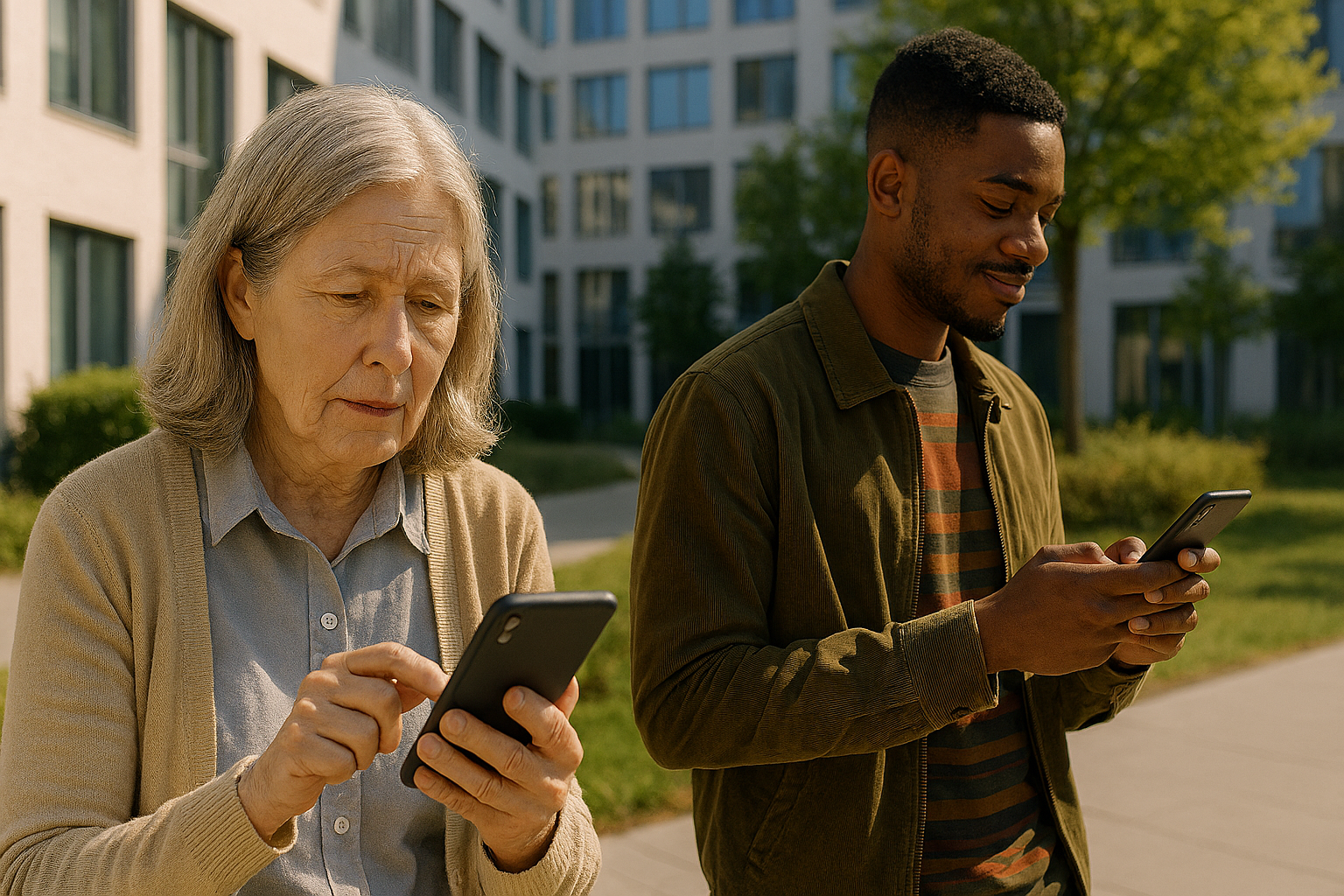
There are several factors that separate how age affects how people use technology. The most obvious one is the age at which someone was first using these technologies. A baby boomer is confronted which the necessity of these technologies later in life and often looks at them as intrusive requirements. They are likely to carry physical currency on them and become annoyed when currency is not accepted at an [in-person] vendor. They are forced to adapt, however slowly that may be. Even the word “technology” has different connotations for them than the much younger demographic who grew up with digital interactions and media.
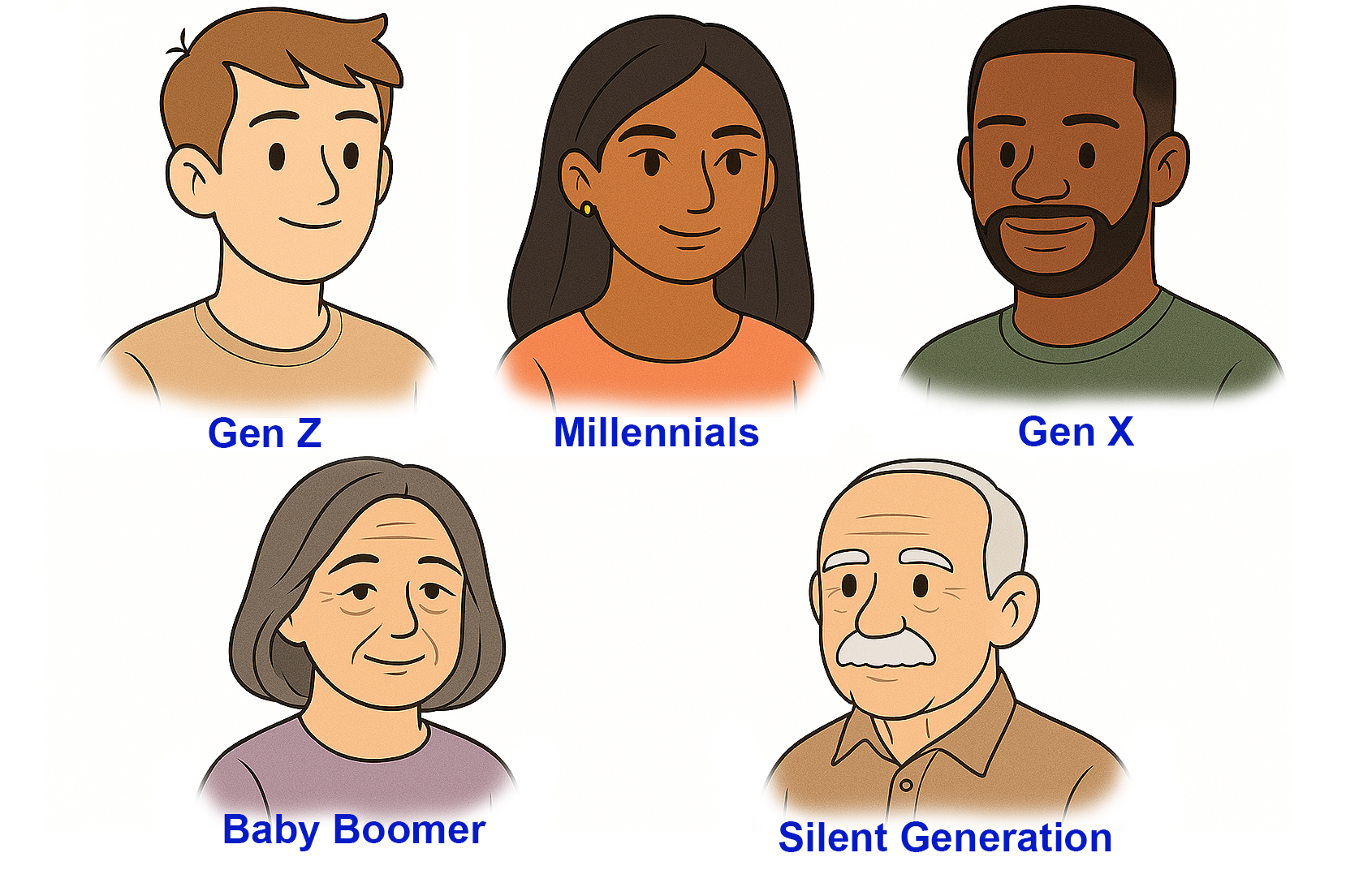
Millennials and Gen Z were exposed to digital interactions and media very early in their lives if not from the beginning. Their perception is one of passive expectations like the expectation that there is going to be air to breathe. They do not generally view it as something that is helpful or improves productivity, but rather the view is one where it is simply there. It is fully incorporated into their daily lives. They see it as the content it delivers and not the process by which it happens any more than they think about breathing.
There are important factors to consider when addressing each of these generations. Often, the aspect of age in UX is over simplified to 2 areas. First is ergonomics or human factors. These mechanics are important in terms of physical capabilities and limitations. The 2nd criterion is viewing each demographic in a monolith way where they are either part of the target group or not part of it. What is often neglected is the psychology, user behaviors, and social influences that affect each group’s interaction with current and new technologies. Not considering these factors can result in the dismissal of an entire demographic because the technology was not appropriately adapted for them.
This incomplete approach can also result in a product which is designed by one demographic, to be used by another. This often creates a disconnect since the design and development team are likely to be biased by their own expectations. This creates a user paradigm that is partially based on the designer’s perspective (however inadvertent that may be) and a limited view of the target user that may also include stereotypes. Do you research and understand that an underserved audience may be the result of an interaction model that sadly misses the mark.


 UX with forays into Science, Technology and Arts